

On the morning of November 7, 2025, the Institute for Global Health and Development at Peking University (GHD) hosted the 11th PKU Global Health Leadership Dialogue at the Peking University Science Park. We are honored to invite Professor Hermann Lotze-Campen, a distinguished scientist from the Potsdam Institute for Climate Impact Research (PIK) and a professor at Humboldt University of Berlin, who delivered an academic exchange session titled "Planetary Health and the Roles of AI."
Bernhard Schwartländer, Distinguished Senior Research Professor at PKU Institute for Global Health and Development, chaired the session. He emphasized that the world is currently confronting the compounded challenges of climate crisis and public health issues. In the fields of green development and health governance, he noted that China and Germany, as major global actors, must engage in transnational and interdisciplinary academic dialogue and practical cooperation. Such collaboration represents not only a critical pathway for addressing global issues but also a concrete practice in advancing the vision of building a community with a shared future for mankind.
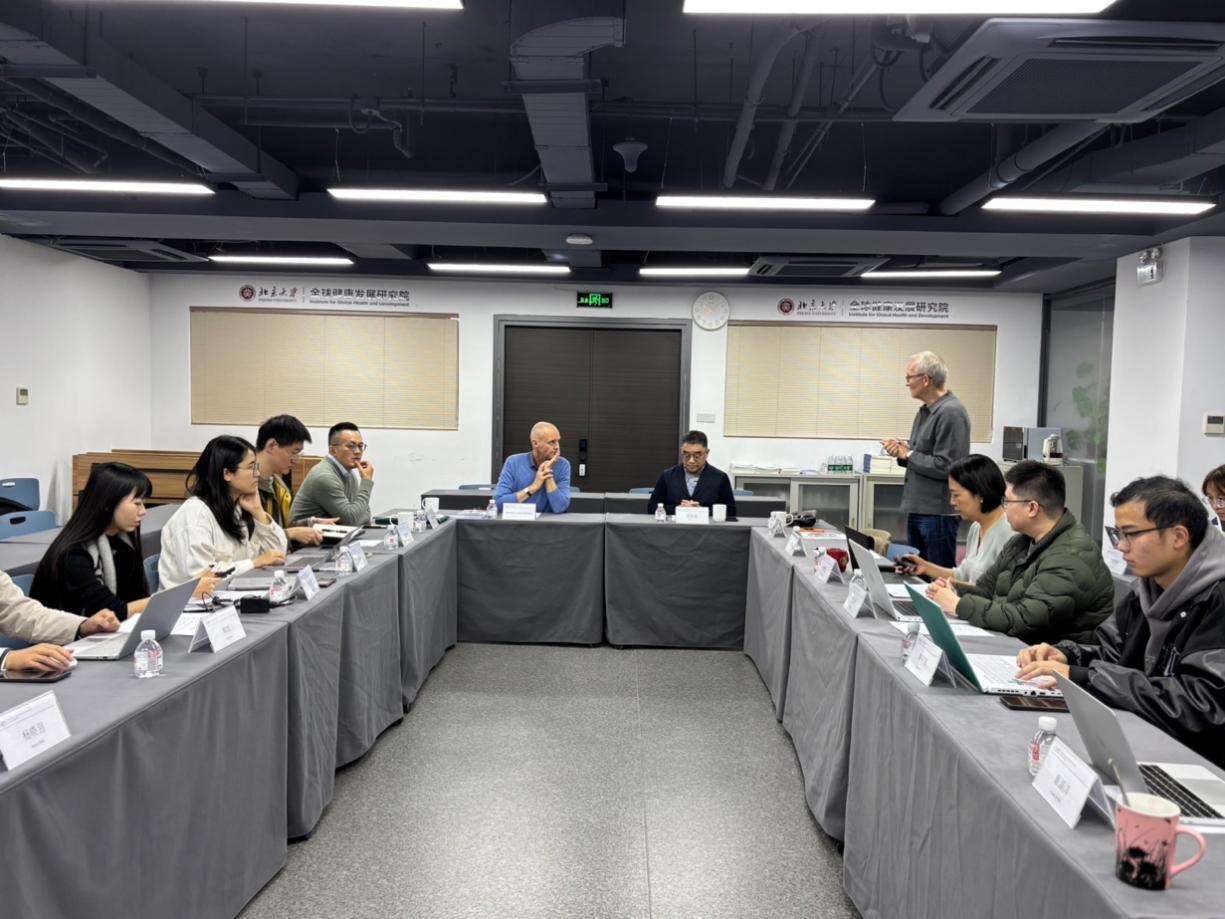
Professor Bernhard Schwartländer chaired the meeting.
Professor Liu Guoen, Dean of PKU Institute for Global Health and Development, emphasized in his address that since its establishment, the Institute has consistently upheld the core vision of "promoting sustainable global health development." It has dedicated itself to advancing interdisciplinary research and high-level international collaboration, taking the lead in launching innovative initiatives such as the "Planetary Health Axis System (PHAS)." The Institute is committed to leveraging cutting-edge technologies like artificial intelligence and big data to address fundamental challenges at the intersection of health and environmental sustainability. Professor Liu Guoen specifically highlighted the China-Germany Dialogue and Cooperation Mechanism on Climate Change and Green Transition, signed in 2023, which has laid a solid foundation for bilateral cooperation in the intersection of health and climate. He expressed his hope that this exchange would serve as a catalyst for translating academic consensus into tangible collaborative outcomes.
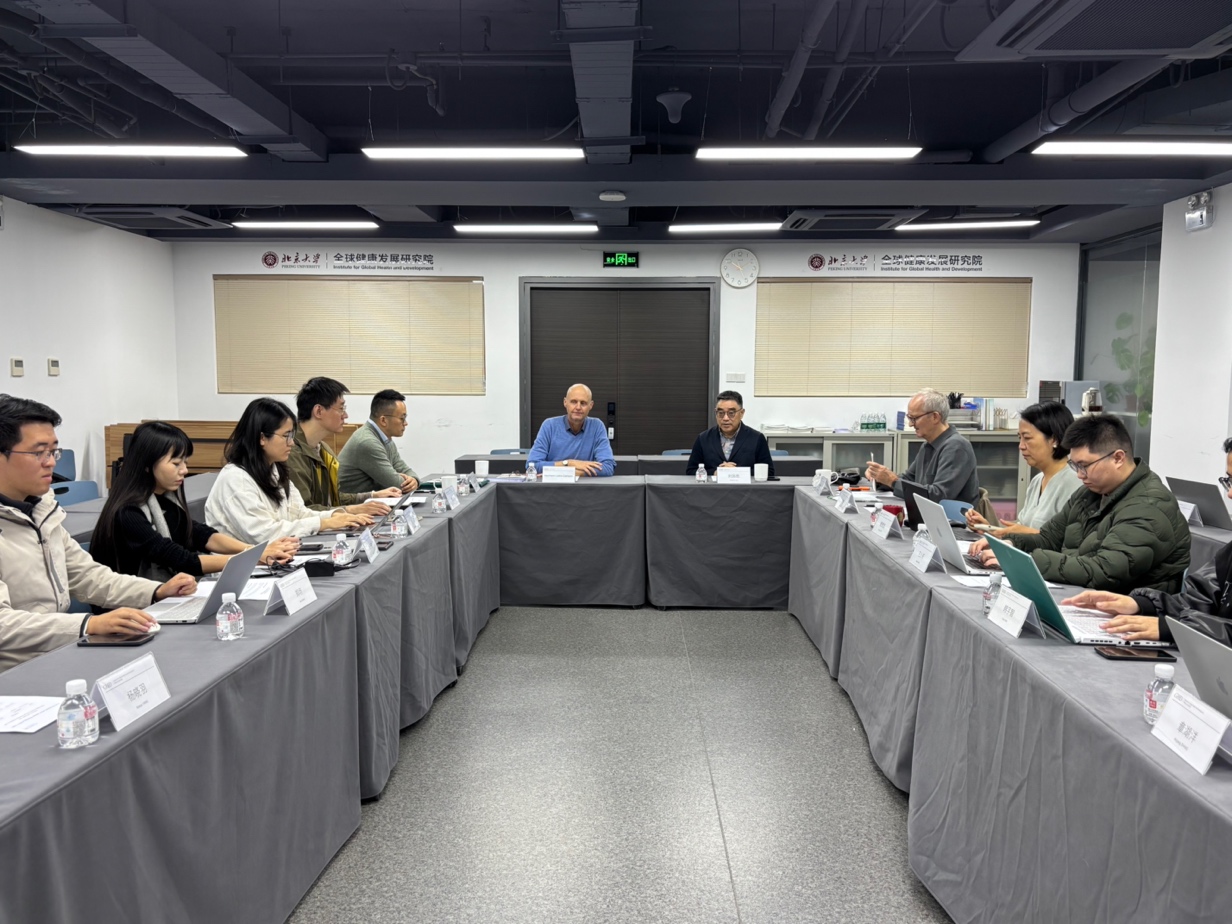
Professor Liu Guoen delivered the welcoming remarks.
Dr. Chen Ermo, Chief Scientist of the Planetary Health Axis System (PHAS), provided a comprehensive overview of the project's latest developments and application prospects. As the world's first AI-driven digital monitoring platform for planetary health, PHAS integrates over 48,000 key variables across four critical dimensions: human health, species health, environmental health, and societal health. Through dynamic visualization and intelligent analytics, it delivers scientific decision-making support for climate and health co-governance, with predictive performance that has surpassed traditional models in multiple empirical studies. Dr. Chen emphasized that PHAS serves as an open global public good and is actively expanding its international collaboration network, expressing particular interest in deepening cooperation with German research institutions in areas such as data sharing and model optimization.
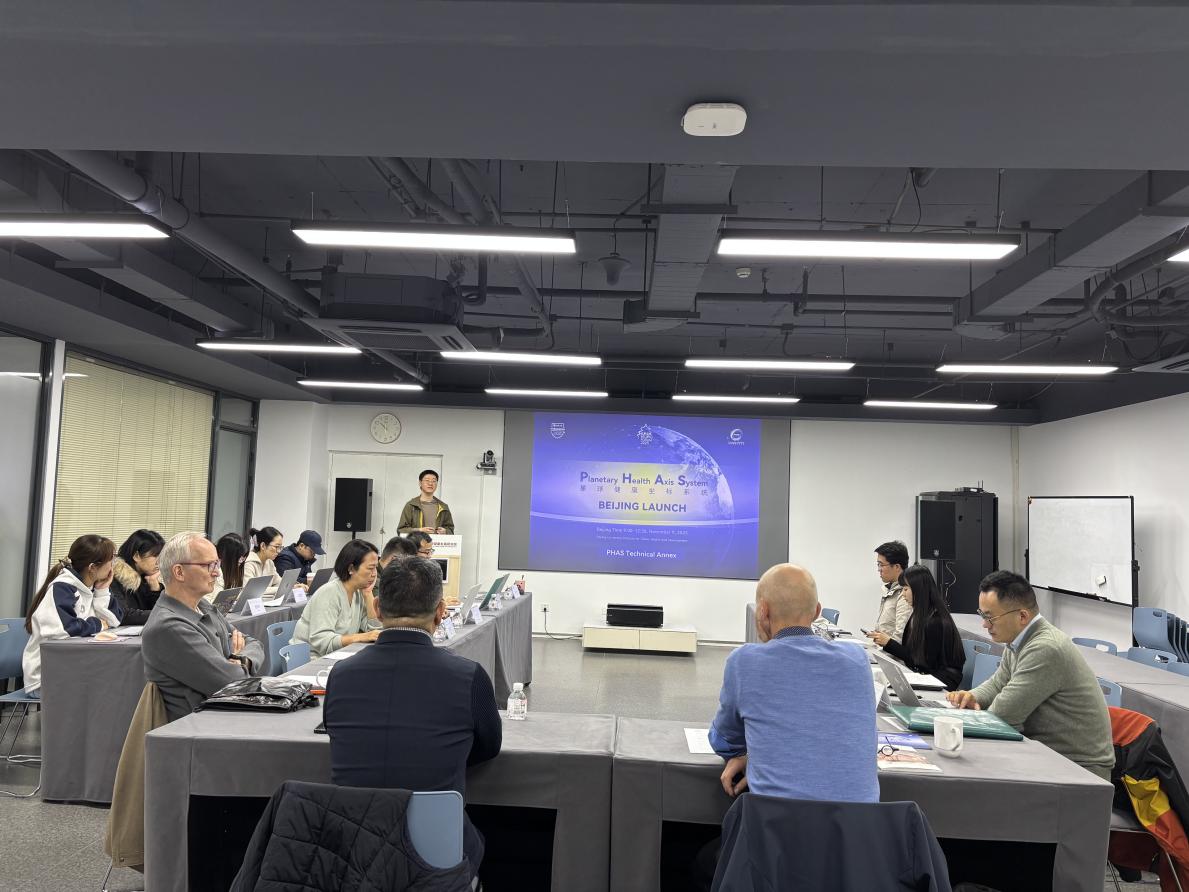
Dr. Chen Ermo presented an overview of PHAS.
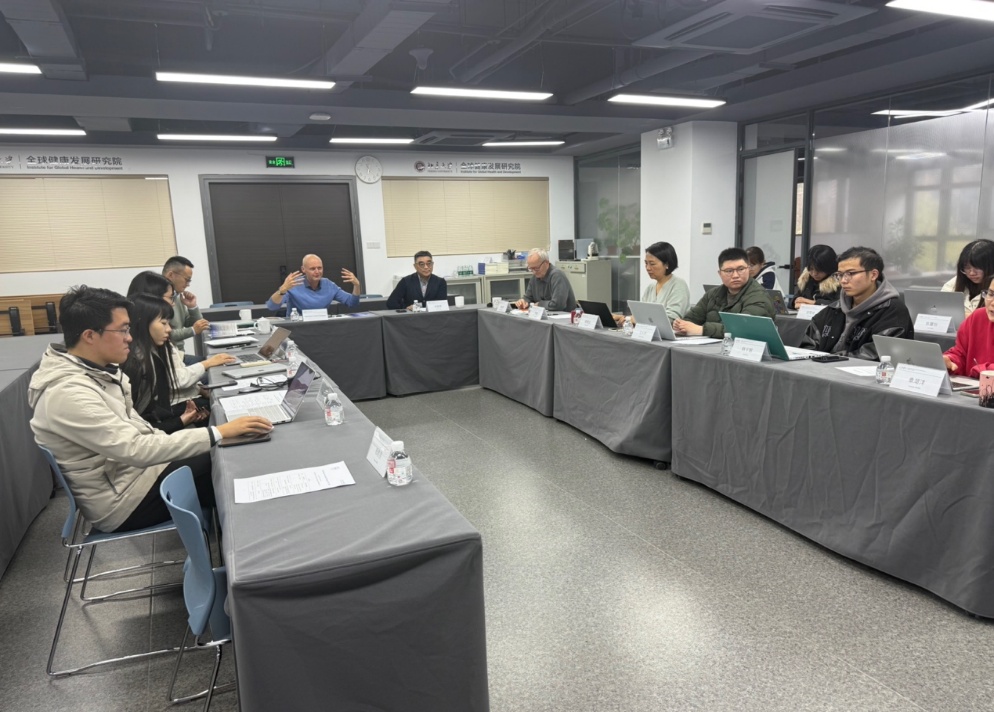
Professor Hermann Lotze-Campen delivered a discussion remark.
During the seminar's academic exchange session, Professor Hermann Lotze-Campen presented his cutting-edge research findings in the fields of climate resilience, sustainable land use, and food system transformation. He emphasized that the cascading impacts of climate change on global food security and public health have become increasingly prominent, representing a critical challenge that demands interdisciplinary collaborative responses. Professor Lotze-Campen spoke highly of the innovative value of the PHAS system, noting that its multidimensional integrated framework aligns closely with PIK's research on global land use modeling and climate policy assessment. He proposed establishing a long-term collaboration mechanism between both parties to jointly advance scientific research and policy exploration in climate-health co-governance.
Experts at the meeting exchanged views on climate-resilience building, sustainable transformation of food systems, cross-border data sharing, and synergistic policy implementation. Professor Bernhard Schwartländer called for the full integration of the health dimension into climate-policy frameworks and for strengthening the systemic coherence of response strategies through cross-sectoral coordination. A Sino–German expert group jointly proposed leveraging the respective strengths of the PHAS platform and the PIK modelling suite to launch collaborative research on climate-change health adaptation and low-carbon food-system construction. Associate Professor Wang Xiaoxi (Tenured), School of Public Affairs, Zhejiang University, stressed that climate change and health are highly coupled systemic issues; identifying key risks and co-benefits therefore requires enhanced scenario-based modelling of land-use and food-system interactions. Drawing on his research record in developing and applying China’s integrated food-system assessment model, he noted that methodological and data complementarities with the PHAS platform could advance joint inquiry into climate–health synergistic governance. Participants reached a broad consensus that climate and health constitute a priority domain in which China and Germany share extensive common interests, and that the complementarity of their scientific capacities, technological reserves and policy experience offers ample scope for deeper cooperation.
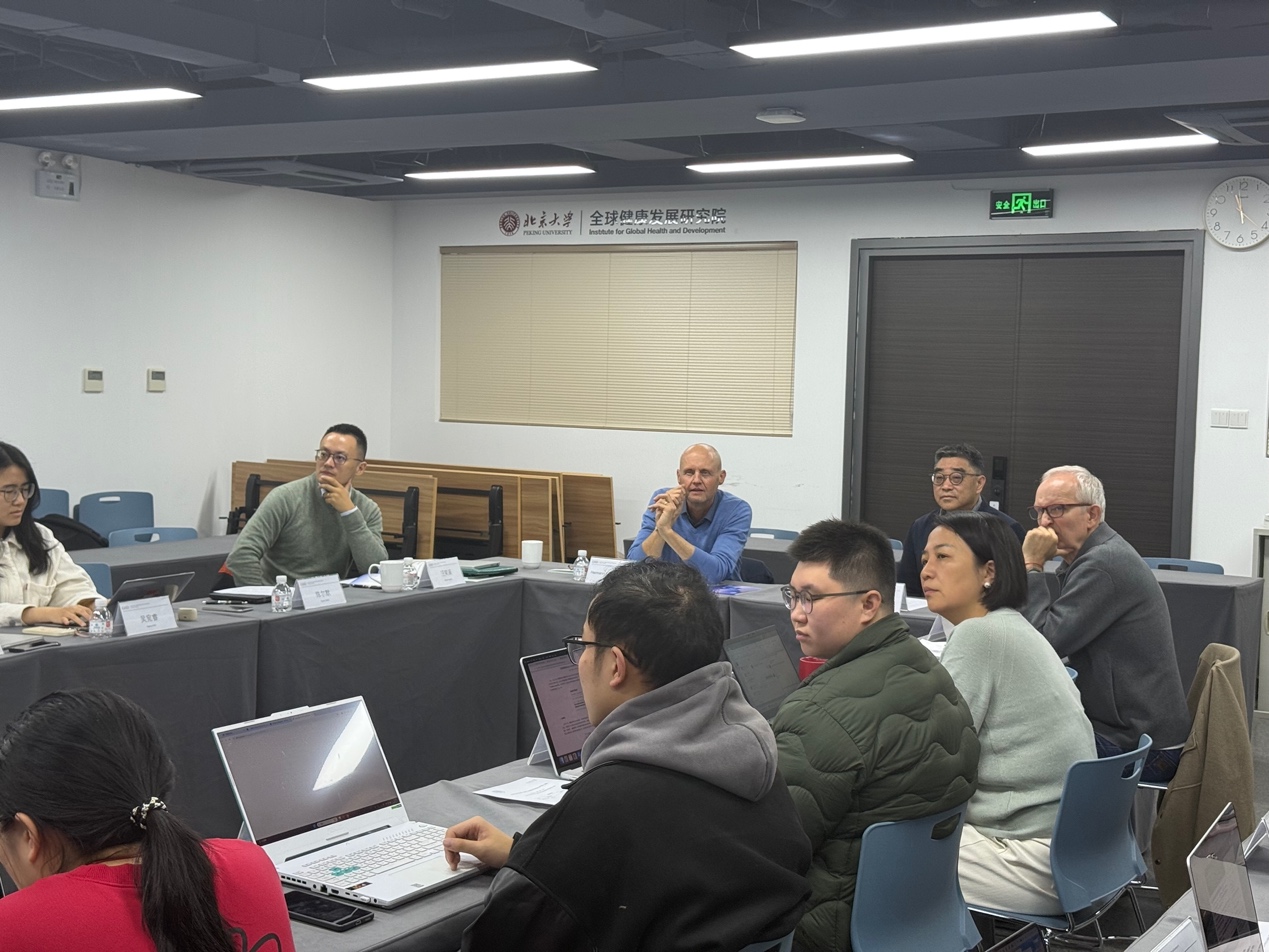
Associate Professor Wang Xiaoxi delivered a speech.
At the conclusion of the meeting, Professor Liu Guoen, Professor Bernhard Schwartländer, and Professor Hermann Lotze-Campen delivered concluding remarks. All three parties unanimously affirmed that they would engage in pragmatic collaboration through academic exchanges, joint research, and policy briefings, focusing on key areas such as climate resilience assessment, sustainable land use, international cooperation in PHAS systems, and the healthy transformation of food systems. By leveraging their respective research strengths, both sides will jointly contribute Chinese and German wisdom as well as feasible solutions to global climate governance and sustainable health development.


