

October 15, 2025, Professor Johan Rockström, Director of the Potsdam Institute for Climate Impact Research (PIK) in Germany and an internationally renowned Earth system scientist, led a delegation to visit PKU Institute for Global Health and Development (GHD). The meeting focused on academic exchanges concerning planetary health and the PHAS initiative. Professor Piao Shilong, Vice President of Peking University and an academician of the Chinese Academy of Sciences, together with experts and scholars from institutions such as Peking University, Tsinghua University, and Beihang University, attended the meeting.
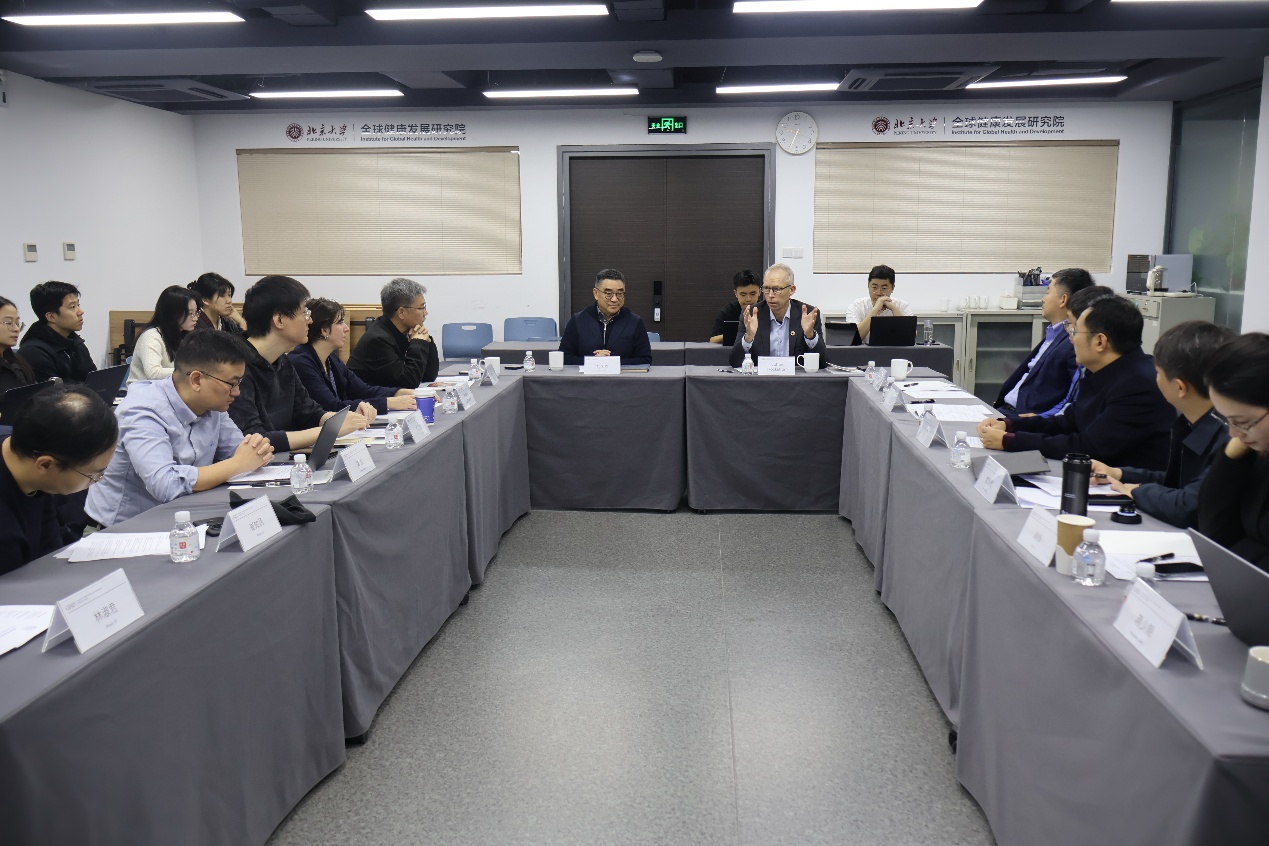
Professor Zhang Haibin, Vice Dean of PKU Institute for Global Health and Development, presided over the meeting. Professor Gordon G. Liu, Dean of GHD, delivered the opening remarks and provided an overview of the Institute's development journey, along with the latest progress on its flagship initiative, the "Planetary Health Axis System (PHAS)" project. Professor Liu emphasized that the pioneering research of Professor Johan Rockström in the field of "planetary boundaries" served as one of the key intellectual inspirations for GHD's launch of the PHAS project. He expressed the hope that this exchange would become a significant opportunity for both sides to to deepen their collaborative research in planetary health. .
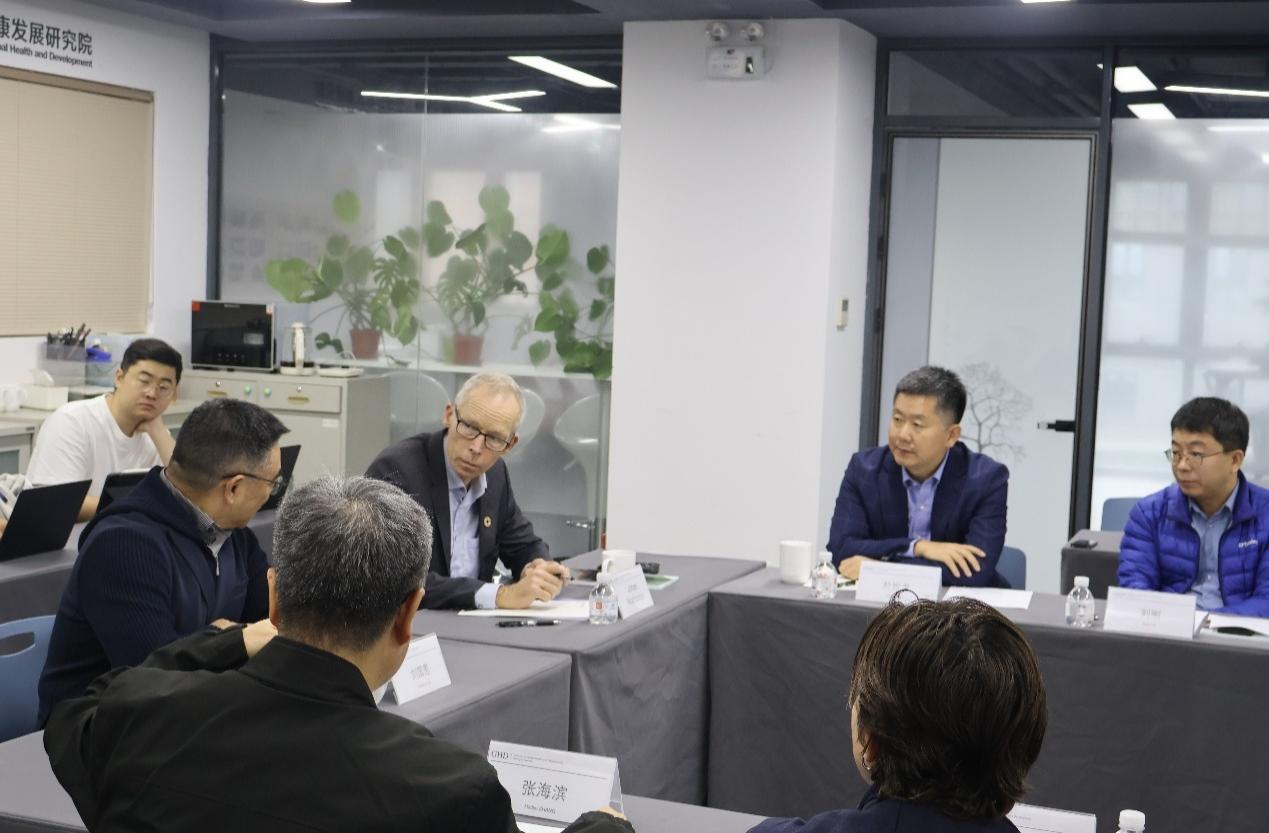
Professor Johan Rockström presented the development strategy of the Potsdam Institute for Climate Impact Research (PIK). He emphasized that PIK is actively promoting the deep integration of Earth system science and human health sciences, and this dialogue represents a crucial opportunity to explore this objective. He expressed strong interest in the PHAS project, noting that such innovative tools are vital for understanding and addressing the complex impacts of Earth system instability on human health. He looks forward to identifying practical pathways for collaboration between the two institutions.
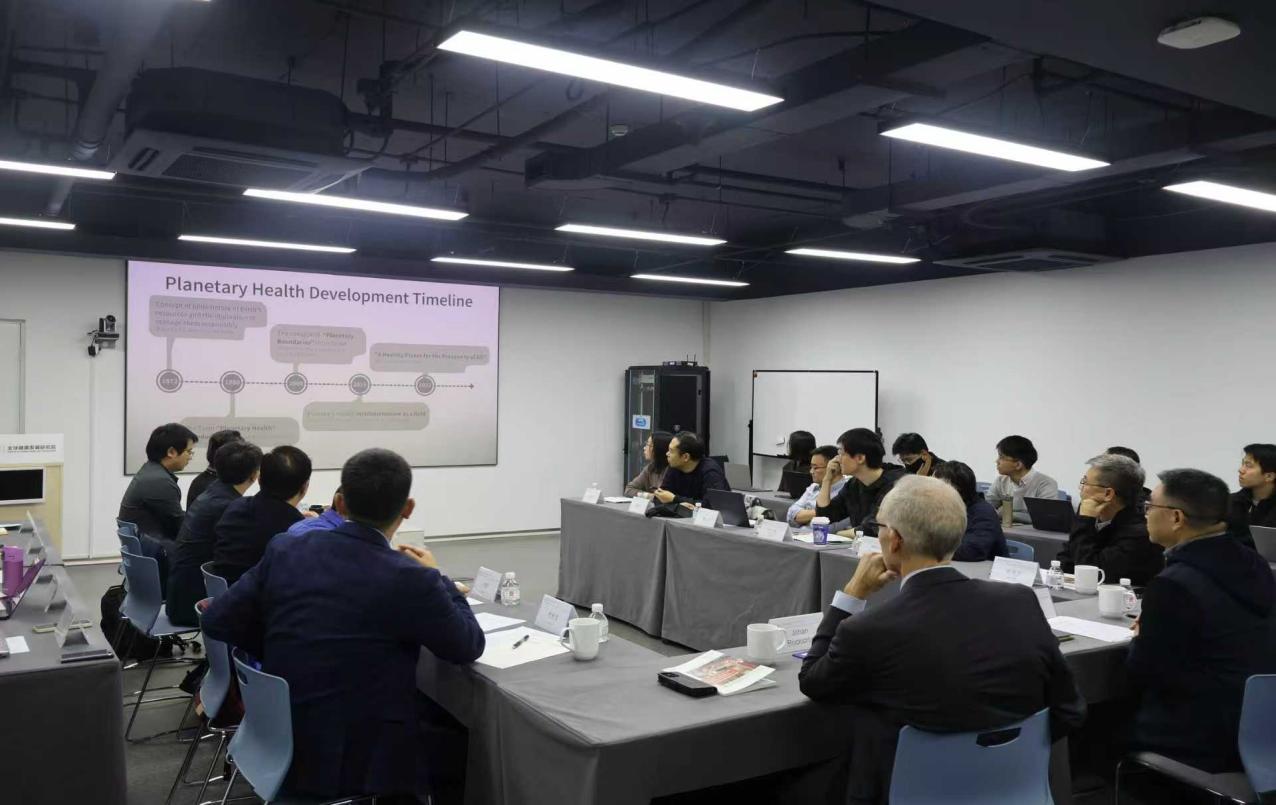
The exchange meeting featured a video demonstration of the PHAS project, followed by enthusiastic discussions among the attending experts. Dr. Chen Ermo, the Chief Scientist of the PHAS project, explained from a technical perspective why the PHAS model possesses high predictive performance for planetary health issues: PHAS is a triple-integrated system that synthesizes prior knowledge from historical literature, real-time multi-domain dynamic data, and feedback from leading scientists. These three components work in concert, enabling the system to conduct risk assessments and future predictions with greater precision. Associate Professor Dai Hancheng, an adjunct research professor at the Institute of Global Health and Development (GHD) and a faculty member of the College of Environmental Sciences and Engineering at Peking University, highlighted that the PHAS system can operate at four functional levels: first, validation, by comparing outputs with historical trends; second, monitoring, by tracking short-term dynamic changes; third, prediction, by projecting long-term future scenarios; and fourth, evaluation, by simulating external shocks or policy interventions to assess the effectiveness of policies. Professor Liu Gang from the College of Urban and Environmental Sciences at Peking University addressed the challenges of quantifying and ranking national human health levels within PHAS. He proposed drawing on the concepts of "absolute sustainability" and "fair share," emphasizing that the core objective is not to compare "which country performs better or worse," but to equitably allocate responsibility and development space within the limited safe operating boundaries of the planet for countries with different population sizes and developmental stages. He further suggested that the system should focus on simulating the transfer of materials and impacts across subsystems. For example, modeling how the food system extracts resources from the natural sphere (impacting environmental health) and, after processing, affects human health (through nutrition or pollutants). Such quantitative analysis of cross-system linkages represents a key value of the project.
Professor Johan Rockström highly commended the progress of the PHAS project, recognizing the forward-thinking approach of integrating vast datasets with artificial intelligence to simulate complex Earth systems. He suggested that the greatest potential contribution of PHAS lies in assessing the direct and indirect impacts on human health when human activities approach or exceed "planetary boundaries," rather than replicating existing geophysical system models. Professor Rockström further proposed specific directions for collaboration, including applying PHAS to quantify the complex dual impacts of the global food system on human health. For example, he noted that recent research indicates approximately 15 million premature deaths annually are linked to unhealthy diets (a figure that may be underestimated), while the "indirect" harm to human health caused by unsustainable food production through environmental degradation remains to be quantified by the scientific community. He expressed his anticipation for PHAS to make breakthroughs in this area.
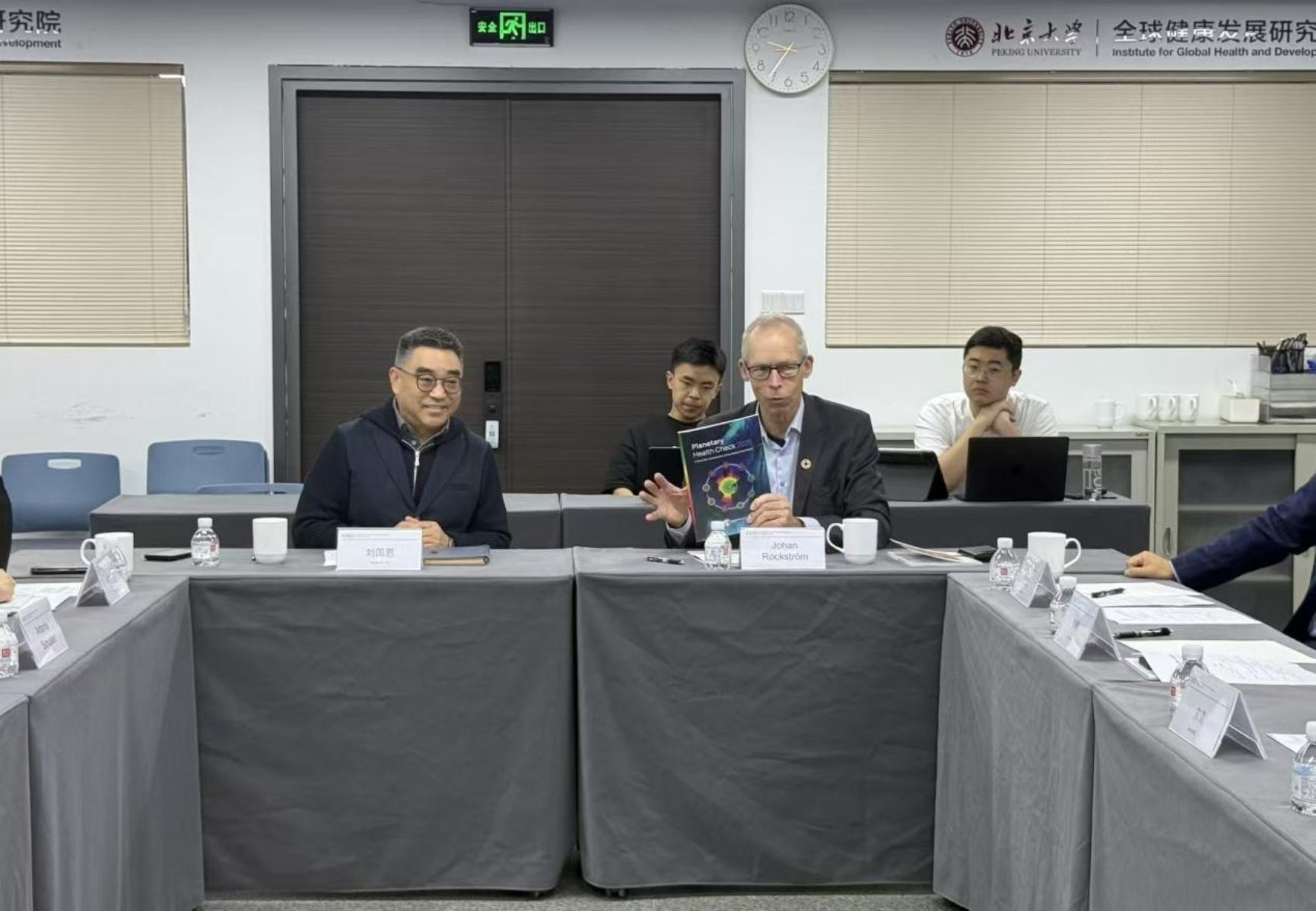
At the conclusion of the meeting, both sides expressed their intention advance collaboration through multiple pathways.. The two institutions agreed to promote mutual team visits and academic exchanges to explore joint research initiatives. Furthermore, Professor Gordon G. Liu expressed the hope for a collaboration with Professor Johan Rockström to publish a Chinese translation of his seminal work, Breaking Boundaries, aiming to make cutting-edge scientific ideas more accessible to Chinese academia and the general public. This meeting has laid a solid foundation for long-term cooperation between the two academic institutions, with the shared goal of further advancing planetary health and the sustainable development of human civilization.
(Translated by Xiong Ruodan)


