

On April 13, 2026, the Peking University Institute for Global Health and Development (GHD) successfully held the 13th session of the Peking University Global Health Leadership Dialogue. The session featured Professor Tan Sri Dr. Jemilah Mahmood, Executive Director of the Sunway Centre for Planetary Health at Sunway University, Malaysia; Dr. Xiaoxi Zhao, Lead Research Scientist at the Brown University School of Public Health; and Dr. Ermo Chen from GHD. The dialogue focused on two major themes: “policy translation of planetary health” and “incentive mechanisms in health insurance.” Professor Gordon G. Liu, Dean of GHD, chaired the dialogue and delivered welcome remarks. Professor Bernhard Schwartländer, Distinguished Chair Professor of Planetary Health at GHD, delivered concluding remarks. Scholars from Peking University, Sunway University, and related institutions attended the event.
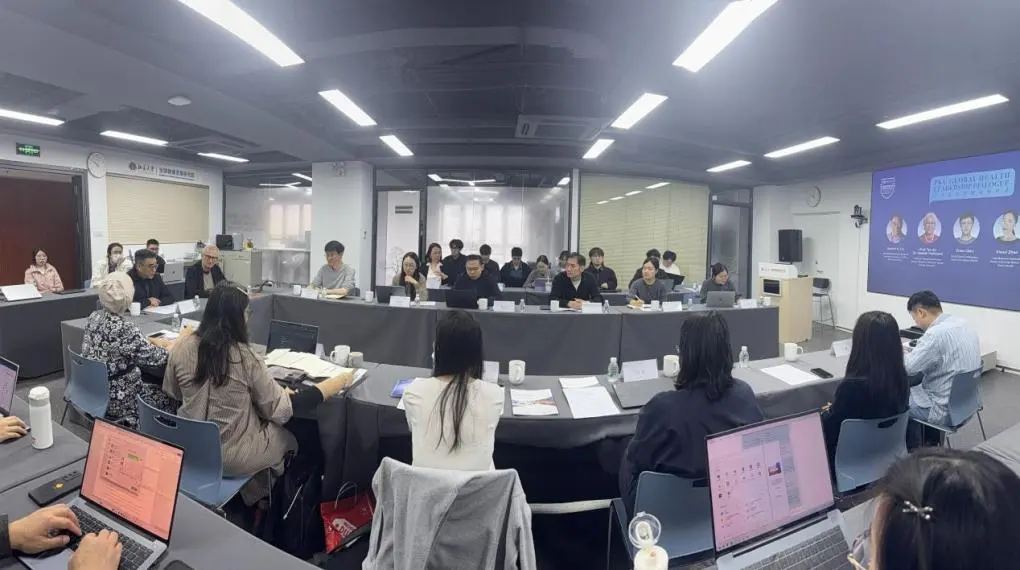
Professor Gordon G. Liu delivers welcome remarks
In his opening remarks, Professor Gordon G. Liu emphasized that in the face of the dual global challenges of climate and health, in-depth interdisciplinary exchange and collaboration are essential. He reviewed GHD’s research progress in the field of climate and health, with reference to the substantial progress made since the launch of the “Planetary Health Axis System (PHAS)” project in October 2023, especially in expanding global collaboration networks and bringing together insights from leading scholars worldwide. Professor Liu noted that the dialogue aimed to explore how the scientific strengths of the Peking University team in technical modeling could be combined with the rich policy translation experience of international partners, thereby jointly advancing substantive progress in planetary health in real-world policy settings.
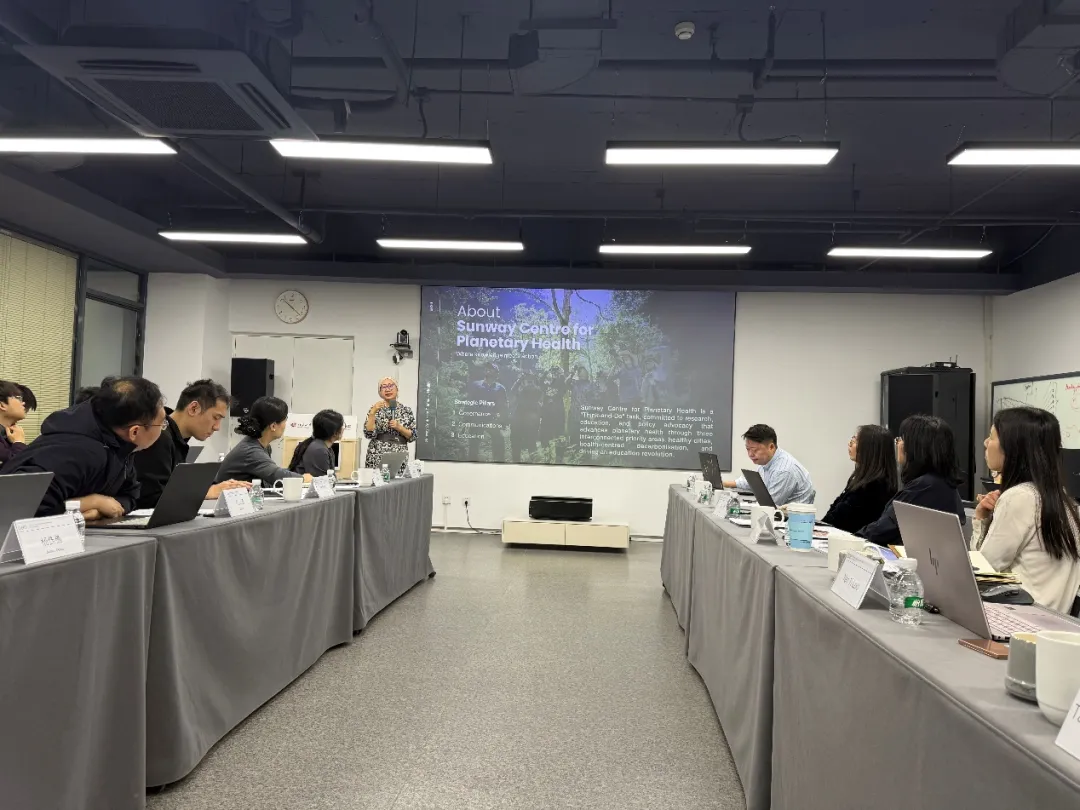
Professor Tan Sri Dr. Jemilah Mahmood presents
In her presentation, Professor Tan Sri Dr. Jemilah Mahmood noted that since the “Planetary Boundaries” framework was proposed in 2009, seven of the nine planetary boundaries have already been transgressed, and the Earth is rapidly approaching irreversible tipping points. She emphasized that the threats that the globe is currently facing go far beyond climate change alone. Rather, there is a “triple planetary crisis” formed by the interaction of climate change, biodiversity loss, and pollution. Any single-issue response detached from a holistic systems perspective will be far less effective. She pointed out that planetary health is highly aligned with traditional Chinese Daoist and Confucian thoughts, and that Asian cultures enjoy unique advantages in promoting broader recognition of the planetary health concept.
In terms of pathways for action, Professor Tan Sri Dr. Jemilah Mahmood highlighted key initiatives to advance the implementation of Malaysia’s planetary health action plan. These initiatives cover areas such as reforming natural resource governance, cultivating health-oriented values, promoting environmentally friendly economic development, and strengthening education and behavioral change. In the field of education in particular, Sunway University has taken the lead in making “Planetary Health and Community Health” a mandatory module for all undergraduate students. This initiative has now prompted the Malaysian government to make the module mandatory for universities nationwide starting next year. Citing the latest research from the Global Tipping Points report, she noted that a considerable share of positive tipping points is emerging in Asia, which has contributed 74.2% of the world’s newly installed renewable energy capacity. However, current global dialogue remains dominated by the West, and Asian voices are seriously underrepresented. She warmly invited Peking University scholars to participate in the first Global Tipping Points Conference to be held in Asia, and suggested incorporating PHAS into the assessment toolkit for planetary health roadmaps. She noted that Peking University’s strengths in scientific modeling and Sunway University’s experience in policy translation could be highly complementary.
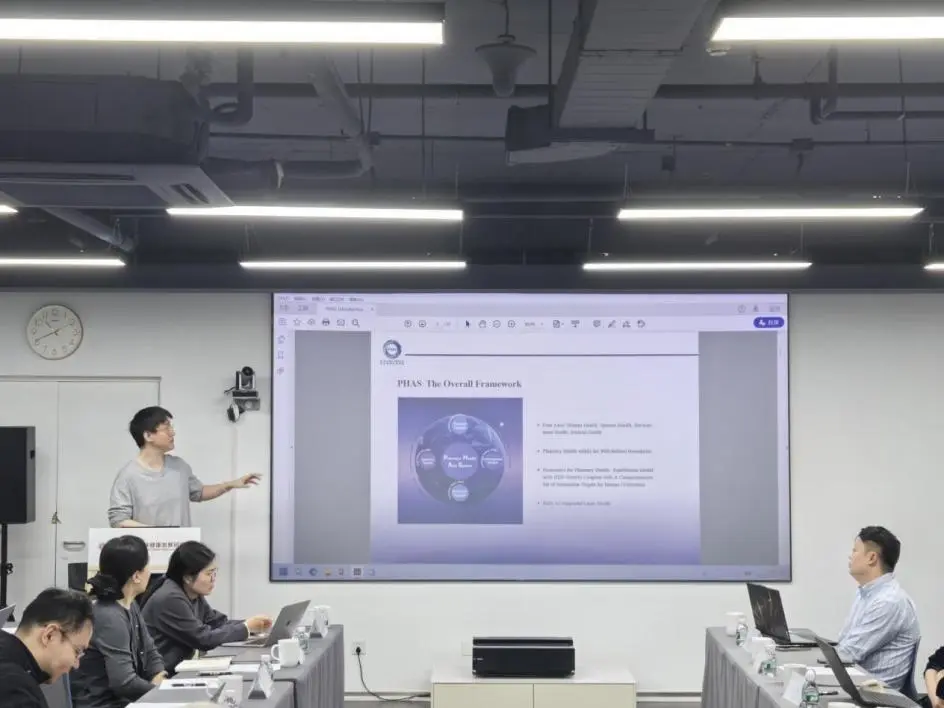
Dr. Ermo Chen presents
Dr. Ermo Chen introduced the Planetary Health Axis System (PHAS) and its latest progress. PHAS is an AI-driven, large-scale, dynamic global digital system designed to track the relationship between the footprint of human civilization and planetary boundaries. The system is structured around four dimensions: human health, species health, environmental health, and societal health. It integrates more than 48,000 key global variables and applies an interdisciplinary approach combining artificial intelligence, Earth science, and economics to build an AI-driven, large-scale, dynamic global analytical system. He also introduced the ongoing development directions of PHAS 2.0, including improving analytical precision down to the national and city levels, collaborating with the Chinese Academy of Sciences on a global dynamic mapping study of extreme weather and human health, and continuously enhancing the underlying AI tools.
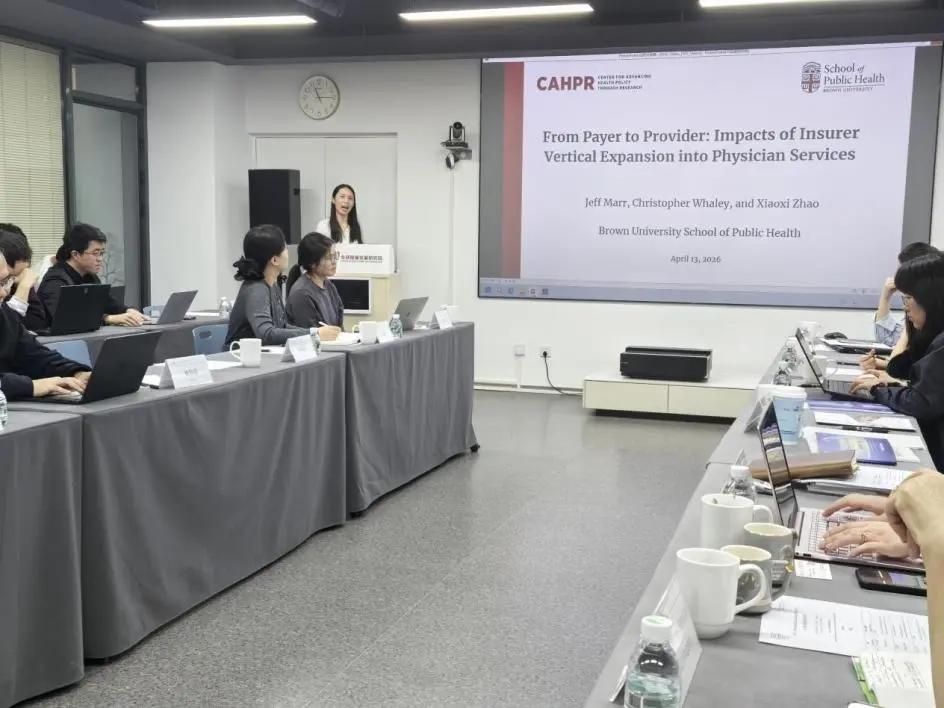
Dr. Xiaoxi Zhao delivers a presentation
Dr. Xiaoxi Zhao from Brown University shared empirical microeconomic research based on the U.S. healthcare market, offering a detailed account of how system design and financial incentives can profoundly affect medical behavior. She illustrated this point through two contrasting cases. On the one hand, after large insurers vertically integrated by acquiring primary care clinics, distorted incentives led to a significant increase in risk scores, causing hundreds of millions of dollars in annual excess spending for the Medicare system without improving healthcare quality. On the other hand, when physicians were allowed to hold ownership stakes in ambulatory surgery centers (ASCs), well-designed incentives successfully guided physicians to shift low-risk patients from high-cost hospitals to lower-cost ASCs. Although the total volume of surgeries increased, total Medicare spending declined significantly, with no observed deterioration in healthcare quality. These studies show that well-designed incentive mechanisms can achieve both cost containment and quality assurance, whereas distorted incentives can lead to systematic adverse outcomes.
During the discussion session, participating experts expressed strong recognition of the value of introducing an economic perspective to analyze policy incentives. Professor Gordon G. Liu noted that Dr. Xiaoxi Zhao’s research provides highly valuable empirical evidence for China’s current policy debates on physicians’ multi-site practice and clinic ownership. It demonstrates that policies detached from real-world incentive mechanisms often fail, while well-designed mechanisms can optimize the allocation of medical resources. In addition, the guests engaged in lively discussions on topics such as the promotion and popularization of new energy, and the positive role of bringing medical services into communities in energy conservation and emissions reduction.
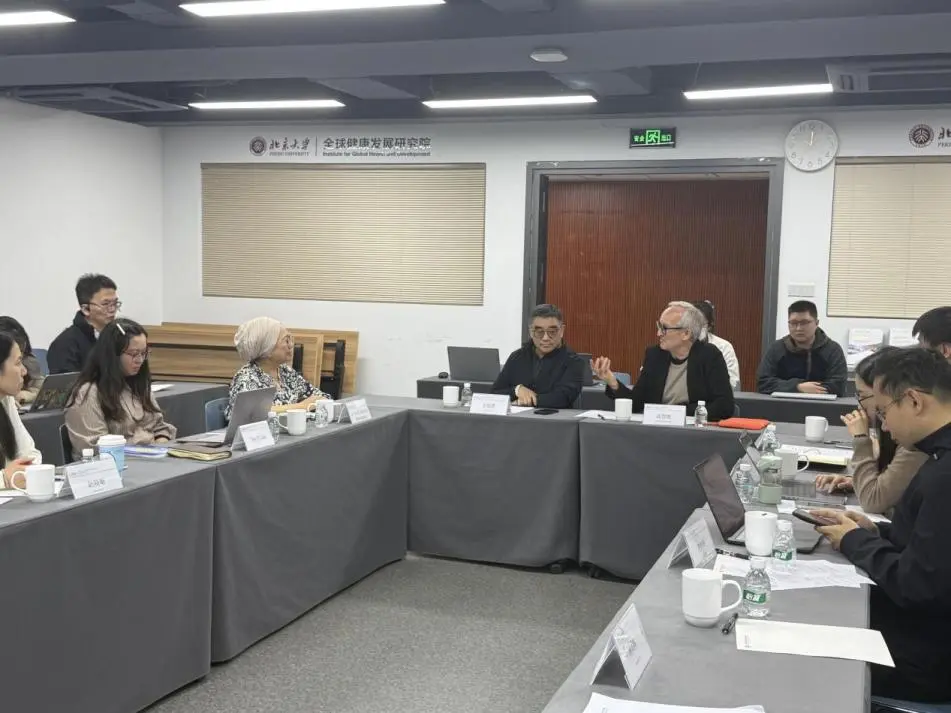
Professor Bernhard Schwartländer delivers concluding remarks
Finally, Professor Bernhard Schwartländer highly affirmed the value of the dialogue in his concluding remarks, noting that it offered important perspectives for understanding planetary health and complex innovation in health systems. With the rise of major crises such as climate change and healthcare reform, the scientific community needs not only precise data and technical solutions, but also the ability to translate them into policy tools and public knowledge. He particularly emphasized that, based on the consensus reached by both sides at the meeting, GHD and Sunway University in Malaysia will promptly begin work on a memorandum of understanding (MOU). Through AI tools, the two institutions will work together to advance the complex systems endeavor of closely integrating planetary health science with political decision-making and human behavior, contributing wisdom and strength to the grand vision of “One World, One Health.”


