

When the trillion-yuan big health industry meets financial technology, who will pay for healthy longevity? Is AI truly an empowering tool, or a source of further disruption? How should Chinese healthcare companies expand overseas? A discussion focused on this “trillion-yuan question” sketched out a future landscape filled with both opportunities and challenges.
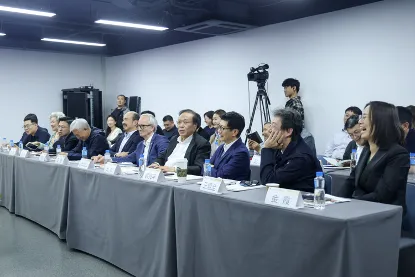
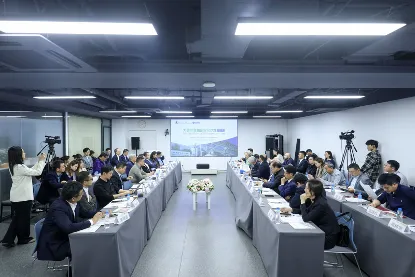
On April 19, 2026, the first session of the “Big Health + Finance” Entrepreneur Salon, jointly hosted by the Peking University Institute for Global Health and Development and the School of Management and Economics of The Chinese University of Hong Kong, Shenzhen, was held in Beijing. This closed-door roundtable brought together dozens of renowned economists, medical experts, and leading figures from the pharmaceutical, healthcare, and fintech sectors. In an open-dialogue format, participants engaged in in-depth discussions on major topics including global health, digital healthcare, financial technology, and the implementation prospects of artificial intelligence in medical settings.

Professor Gordon G. Liu Speaks
Big Health, Planetary Boundaries, and Financial Synergy: Building a New Paradigm
“Relying solely on medical technology in exchange for health is not only costly, but also limited in effectiveness.” As the convener of the salon, Professor Gordon G. Liu, Dean of the Peking University Institute for Global Health and Development, Distinguished Professor at the Peking University National School of Development, and Member of the Chinese Academy of Medical Sciences, directly identified the core dilemma in the healthcare sector.
In response to this dilemma, Professor Liu proposed a “three-dimensional” big health paradigm: adopting an all-factor perspective to coordinate health determinants such as genes, environment, and lifestyle; applying an all-population management approach across the entire life cycle, with the focus of health management shifting from treatment to early prevention; and building an all-encompassing community of shared future for health through a global framework. Looking ahead, he proposed the development of an AI model-based Planetary Health Axis System, or PHAS, to explore the internal relationships among global health, economic growth, and planetary boundaries. The goal is to elevate human health to the systemic level of planetary health and promote the sustainable development of human civilization.
Professor Wang Dong of the School of International Studies at Peking University, who also serves as Deputy Director of the Office for Humanities and Social Sciences and Executive Director of the Institute for Global Cooperation and Understanding, spoke highly of this innovative vision of “planetary health.” He noted that the “three-dimensional” framework provides a new analytical paradigm for health management, while PHAS moves beyond a purely human-centered perspective and builds a dynamic, panoramic global health monitoring system, serving as a benchmark example of interdisciplinary practice. He also emphasized that the sustainable development of the big health industry cannot be separated from financial empowerment, while finance, in navigating economic cycles, likewise needs to anchor itself in health as a long-term and relatively certain sector. Big health and finance, he noted, are naturally each other’s best “long-term partners.”
Professor Zhang Hongqi, Vice Chair of the Neurosurgery Branch of the Chinese Medical Association and Director of Neurosurgery at Xuanwu Hospital, Capital Medical University, stated that PHAS and its “top-down” systems perspective represent a direction of cognitive upgrading that Professor Gordon G. Liu has long actively pursued. He noted that in promoting the innovative translation of neurological medicine, he had engaged extensively with fields beyond medicine, but his knowledge system remained relatively fragmented. Through this process, he gradually formed a core judgment: economics is the clearest analytical tool for understanding hospital behavior, physician decision-making, and the direction of health policy. In the short term, economic logic dominates the trajectory of healthcare, but in the long run, the system will eventually return to some form of ideal equilibrium. The integrative framework provided by PHAS, he said, can precisely bridge this fragmentation by incorporating economic logic into a broader and more systematic analytical structure, thereby providing a stronger theoretical foundation for medical innovation and translation.
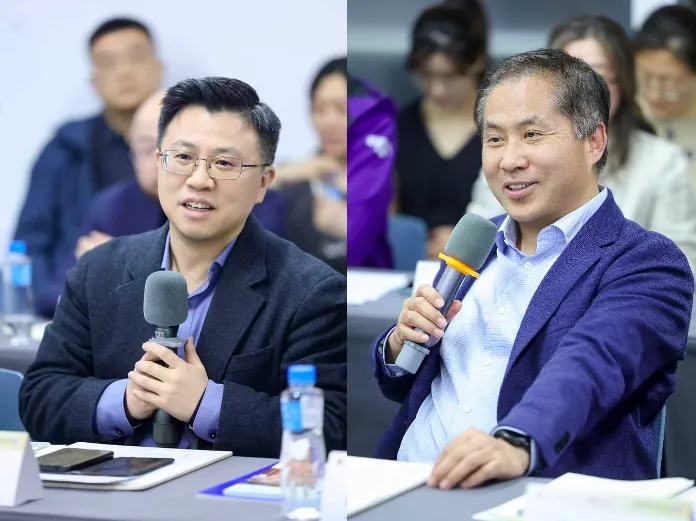
Professor Wang Dong speaks (left); Professor Zhang Hongqi speaks (right)
This view soon sparked an engaging exchange of ideas. Professor Zhang Weiying, Jinguang Chair Professor of Economics at the Peking University National School of Development and Director of the Peking University Center for Market and Network Economy, expressed cautious concern about PHAS. He emphasized that human understanding of the laws of nature is far from perfect, boundaries remain blurred, and future changes are open-ended. Once unified norms are imposed in the name of “optimal goals,” history has shown that the results are often disastrous. The boundaries of knowledge itself are not fixed, and necessary humility should be maintained toward any systematic prediction.
In response to these sharp questions, Professor Liu offered a candid reply. Precisely because the future is full of uncertainty, he argued, humanity needs scientific research to continuously reduce blind spots in cognition and narrow the boundaries of risk. At the same time, he drew an important distinction: PHAS is essentially “descriptive” rather than “prescriptive.” Its task is to present as clearly as possible “what is most likely to happen,” rather than to dictate “what should be done.”
Renowned economist Xue Zhaofeng, former Professor of Law and Economics at the Peking University National School of Development, raised a practical question from another angle: how can the multidimensional parameters of a health index be converted into a comparable and aggregable result? Beyond longevity, for instance, there are also values such as the sense of existence and curiosity. How these values can be converted remains an unresolved question. Nevertheless, he also expressed optimism, noting that the meaning of indicators lies in their continuous correction during the process. Demand will always be scarce, and health finance has considerable room for development.
Jin Man, Founding Dean of the Peking University Academy of Opera and Director of the Arts and Health Management Laboratory at GHD, analyzed the issue from a humanistic perspective. She noted that the core of art and health management lies in proactive health: nurturing mental strength and life energy through cultural genes, rather than passively seeking medical care. Through music, dance, and multisensory enjoyment, art can permeate daily life and cultivate healthy cognition and lifestyles. It should therefore become a required component of life management.
Jin Xia, Founder and Chairwoman of Huoshi Creation Technology Co., Ltd., approached the issue from the perspective of industrial data intelligence, directly pointing to the core obstacle for big health finance: how to enable the life and health industry to be accurately identified and supported by finance. Over the past decade, Huoshi Creation has built a nationwide digital infrastructure for technology finance. Through its original “Innovation Points System,” the company converts an enterprise’s position in the innovation chain and industrial chain into a finance-readable credit evaluation system.

Ms. Jin Xia speaks (left); Professor Jin Man speaks (right)
Who Will Pay for “Healthy Longevity”? Finding a Viable Business Model
As the discussion moves from theory toward practice, “who will pay” becomes a central question.
Professor Zhou Qiren, Boya Distinguished Professor at the Peking University National School of Development, cut directly to the core with his characteristically pragmatic style: the integration of health and finance is essentially about mobilizing more resources, but grand narratives must be translated into practice. The final question is who is truly willing to pay. He offered a clear-headed reminder to entrepreneurs and investors: before chasing the “big health” trend, they must first answer the most basic question — who exactly will pay for your innovation?
Pan Zhongying, former President of United Family Healthcare and a senior hospital manager with 29 years of frontier management experience, offered practical advice. Under the impact of capital and technology, hospital managers can easily fall into the trap of “seeing only the trees and not the forest” — being exhausted by KPIs and losing their direction and overall perspective. This precisely highlights the core value of cross-sector education in “big health + finance”: helping practitioners move beyond the limitations of their own specialties and re-examine the business logic of the health industry from a macro perspective.

Professor Zhou Qiren speaks (left); Professor Pan Zhongying speaks (right)
Li Mingqiang, General Manager of the Health Insurance Business Department of Taikang Life Insurance and Executive Dean of the Taikang Longevity Era Research Institute, provided a mature example of a breakthrough model. More than a decade ago, Taikang anticipated the demographic transformation brought about by the longevity era and took the lead in creating a business model combining annuity insurance with senior living communities. Today, Taikang has established senior living communities in 37 cities across China, supported by a comprehensive medical system with tens of thousands of beds.
Is AI Empowering or Overpowering? Debating the Boundaries Between Technology and Medicine
Artificial intelligence was undoubtedly one of the most challenging topics at the salon. Optimists view AI as an engine of medical revolution, while more cautious observers worry about the risks it may bring in disrupting existing systems.
Zhang Ligang, Founder, Chairman, and CEO of iKang Healthcare Group, and Wang Xiaochuan, Founder and CEO of Baichuan AI, engaged in a dialogue between the “optimist” and the “realist” perspectives on AI healthcare. Zhang Ligang began with the large gap in five-year cancer survival rates between China and the United States, pointing out that China has long neglected preventive medicine. He expressed optimism that AI’s ability to integrate multidimensional data — including genetic, behavioral, and sleep data — could make personalized health management a reality within the next few years. Wang Xiaochuan, by contrast, shifted the focus from technology to institutions. He argued that the real obstacle is not algorithms, but differences in the incentive structures of healthcare systems. For example, if doctors can directly increase their personal income by using AI to improve efficiency, they will actively embrace the technology.
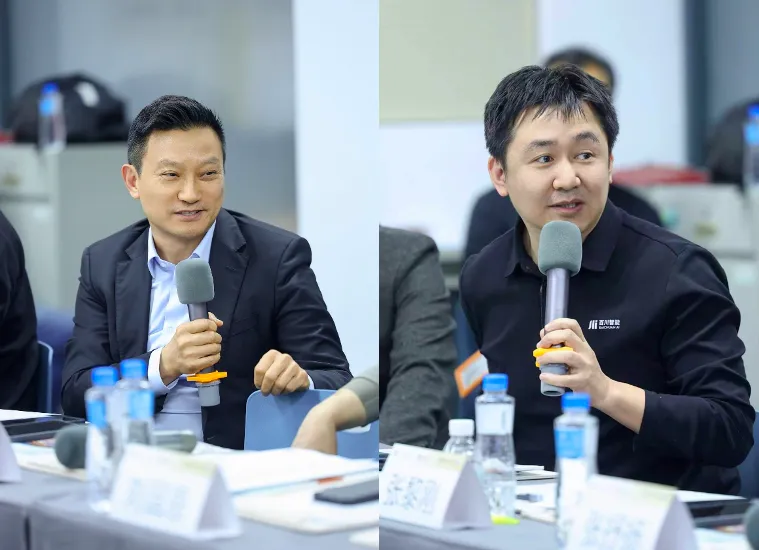
Mr. Zhang Ligang speaks (left); Mr. Wang Xiaochuan speaks (right)
Li Tiantian, Founder and Chairman of DXY.cn, stated that from a data perspective, traditional policymaking often relies on outcome data to reason backward, which can easily be crude and imprecise. By accumulating massive data on physicians’ behavior, DXY is able to precisely capture hesitation and blind spots in real clinical decision-making, thereby providing a more reliable underlying basis for insurance product design, new drug development pathways, and medical policymaking. In his view, the value of data lies not in its scale, but in whether it reflects real human behavior. Li expressed strong confidence in this direction and proposed on the spot that DXY and GHD jointly build and share a physician behavior database to support the development of a Healthy China.
“2026 will be the ‘year of death’ for a large number of vertical medical models,” predicted Professor Wang Shan, former President of Peking University People’s Hospital and Executive Editor-in-Chief of Science Bulletin. In his view, the pace of AI development is starting to slow down., and the upcoming challenges will be rooted in two fatal weaknesses long ignored by developers: logical bias and the hunger for data. The underlying logic of this judgment is that the core of medicine will always be the doctor-patient relationship. AI can improve efficiency, but it cannot overturn medicine. The key to solving the data dilemma lies in establishing a trust and agency system through which patients can manage their own data. Only by resolving data ownership and trust issues can AI generate lasting value in healthcare.
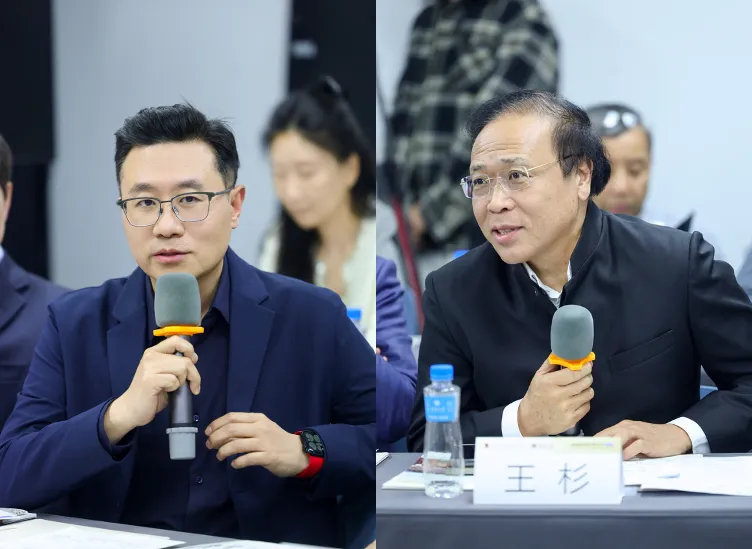
Mr. Li Tiantian speaks (left); Professor Wang Shan speaks (right)
Wang Yuquan, a global expert in technological innovation industries and Founding Partner of Haiyin Capital, pointed out that modern medicine focuses only on patients and knows almost nothing about the health status of “ordinary people” after they leave the hospital. This, he argued, is the deeper reason why hospitals are overcrowded and diseases repeatedly recur. The true breakthrough of AI lies in its ability to deeply analyze massive physiological data and reconstruct each individual’s real health score in daily life. It does not need to fully follow traditional medical standards; as long as a closed loop between data input and output is formed, large models can naturally be trained to develop health judgment capabilities beyond those of doctors.
Zhang Yusheng, Founder of Apricot Forest Information Technology Co., Ltd., suggested that instead of focusing deeply on hospital settings, the industry should turn its attention beyond hospital walls. He frankly expressed his expectations for the Big Health Finance EMBA program. In his view, AI is currently the greatest variable in healthcare, but its implementation requires highly granular scenario design. Small entry points, such as using AI to help patients organize medical records before seeing a doctor, can often generate significant value.
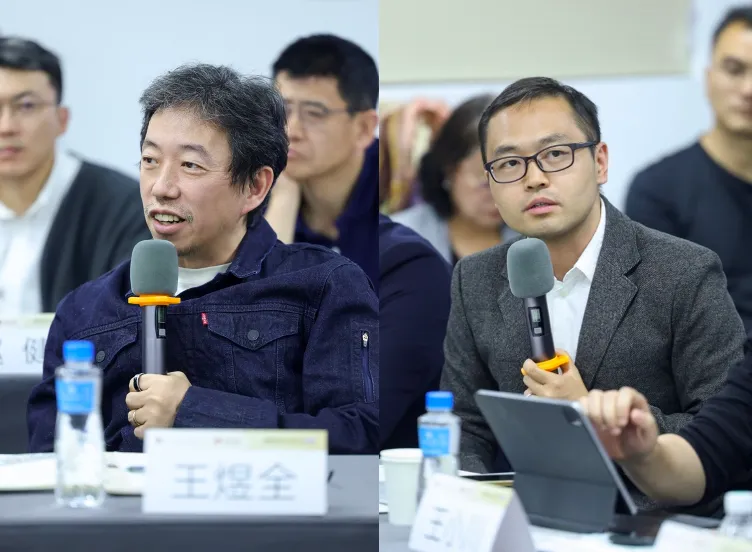
Mr. Wang Yuquan speaks (left); Mr. Zhang Yusheng speaks (right)
Overseas Expansion and Talent: Laying the Groundwork for the Next Growth Driver
As competition in the domestic market becomes increasingly intense, overseas expansion and internationalization have become the strategic direction for the next round of growth in big health finance.
Bian Xin, President of Roche Pharmaceuticals China, noted that there is a natural tension between the exponential development of technological innovation and the highly regulated healthcare industry. The real breakthrough lies in connecting technology, regulation, and payment into a complete closed loop. Drawing on examples from European and American markets, she noted that a well-developed innovation payment system — especially the deep involvement of commercial insurance — is the core engine driving sustained progress in biomedicine. If China’s healthcare industry is to truly go global, it must face this structural challenge directly.
“Hong Kong has irreplaceable and unique advantages in RMB internationalization and global financial connectivity. This is precisely the strategic intention behind the joint efforts of universities in Shenzhen and Hong Kong to develop a health finance program,” said Professor Wang Jian, Associate Dean of the School of Management and Economics at The Chinese University of Hong Kong, Shenzhen, and Director of its Finance EMBA Program. In his view, if Chinese healthcare companies are to enter the global market, the internationalization of supporting financial services is inevitable. A high-level interdisciplinary talent training system is the foundational infrastructure needed to achieve this strategic goal.
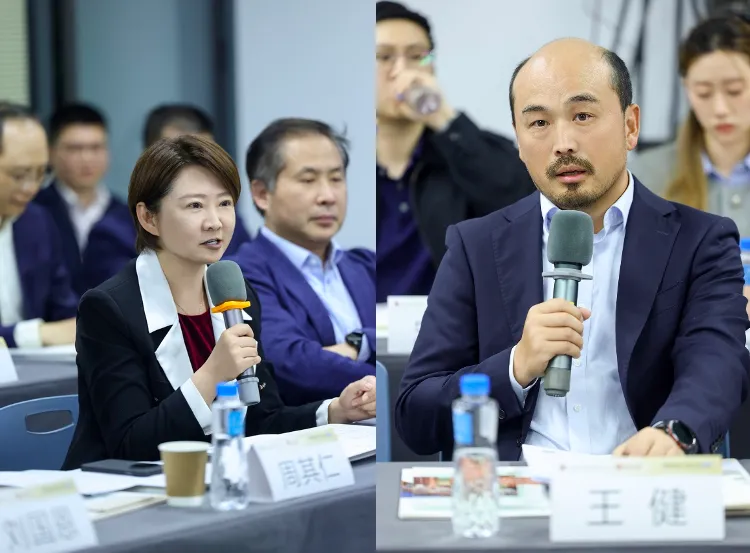
Ms. Bian Xin speaks (left); Professor Wang Jian speaks (right)
Professor Bernhard Schwartländer, former WHO Assistant Director-General and Distinguished Chair Professor of Planetary Health at Peking University, pointed out that global capital is not currently in short supply. The real problem is that capital is not flowing to the right places. The fundamental reason, he argued, is that humanity has not yet learned to define health as a structural asset. In his view, the fields of medicine and economics/finance still lack a shared language and a common framework for value conversion. He therefore called on the medical and economics communities to work together to build a new language system for health investment, so that capital can truly understand the long-term value of health.

Professor Bernhard Schwartländer speaks
At the intersection of big health and financial technology, every unresolved question marks the starting point of innovation. From the “three-dimensional” paradigm to AI family doctors, from the annuity insurance closed loop to new overseas expansion strategies, China’s big health industry is extending its search for solutions with unprecedented breadth and depth.


