

On November 12, 2025, Professor Cao Junji, former Director of the Institute of Atmospheric Physics (IAP) of the Chinese Academy of Sciences and Vice President of the International Aerosol Research Assembly (IARA), Chair of Asian Aerosol Research Assembly, led a delegation to visit PKU Institute for Global Health and Development (GHD). The purpose of the visit was to explore in-depth collaborative research on the Planetary Health Axis System (PHAS) with the GHD scientific team. Other members accompanying Professor Cao included Researcher Xue Jun, Director of the Carbon Peak and Neutrality Laboratory at IAP; Researcher Zhang Siwei from the National Engineering Research Center for Key Generic Technologies in the Cell Industry; Yan Xiao, Vice President of Sina Health Research Institute; and Sheng Yu, Assistant to Professor Cao Junji.
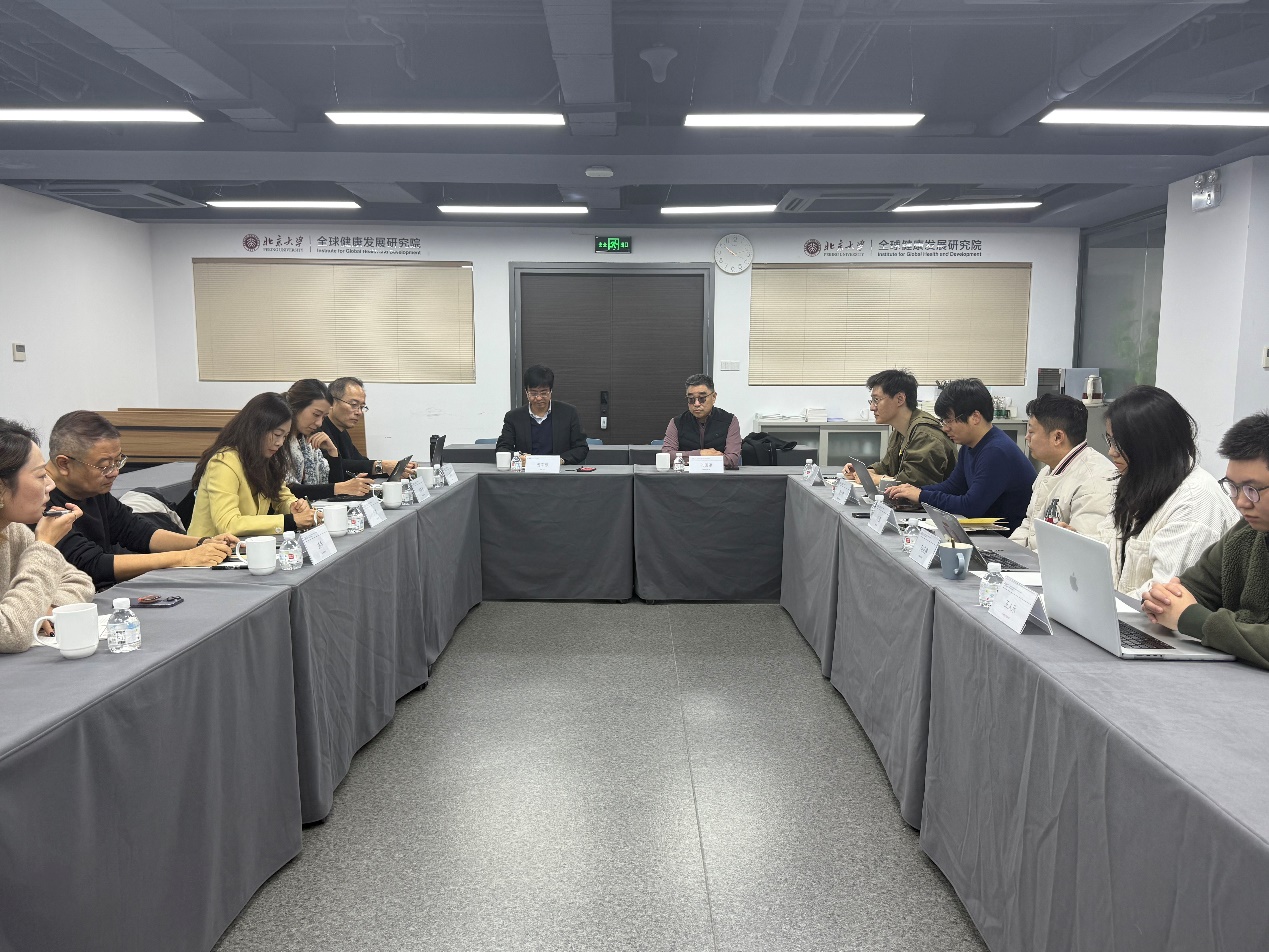
Professor Cao Junji visited PKU Institute for Global Health and Development.
During the exchange session, Professor Cao Junji spoke highly of the Planetary Health Axis System (PHAS) recently successfully established by Peking University. He noted that the deep network modeling technology employed by PHAS demonstrates significant advantages in addressing the nonlinearity, heterogeneity, and causal inference of complex systems at the planetary scale, providing a novel methodological approach to tackling the challenges of coordinated climate and health governance. As an internationally recognized authority in aerosol research, Professor Cao particularly emphasized the system's unique value in simulating cross-border transport of atmospheric pollutants and assessing their health impacts.
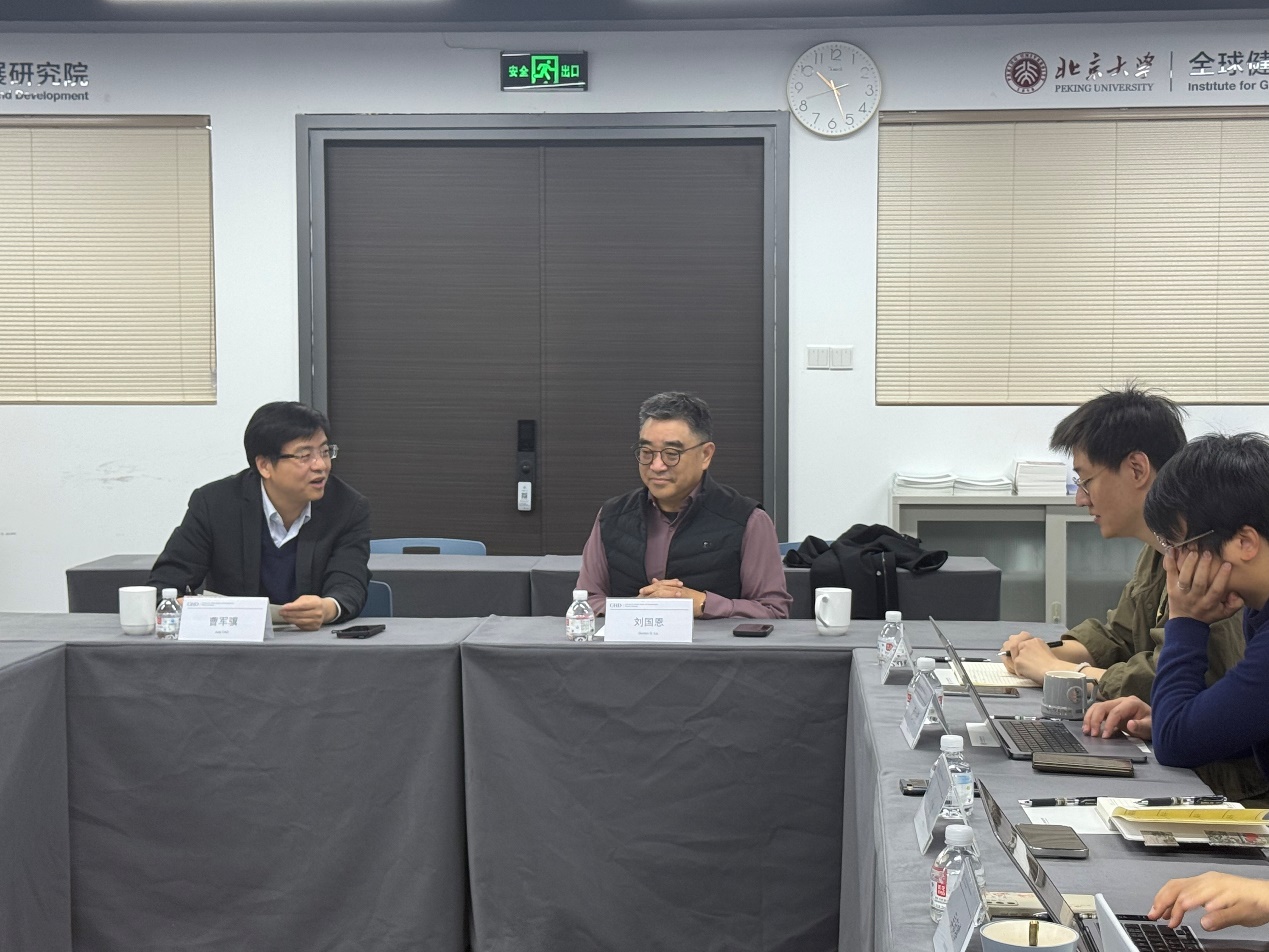
Professor Cao Junji delivered a speech.
Professor Liu Guo'en, Dean of PKU Institute for Global Health and Development, reviewed the journey of PHAS from theoretical conception to international implementation. He expressed gratitude to Professor Cao's team for their pivotal technical support in the development of the system's climate module. Dean Liu emphasized that the cutting-edge atmospheric physics achievements contributed by Professor Cao's team exemplify the multiplier effect of interdisciplinary collaboration.
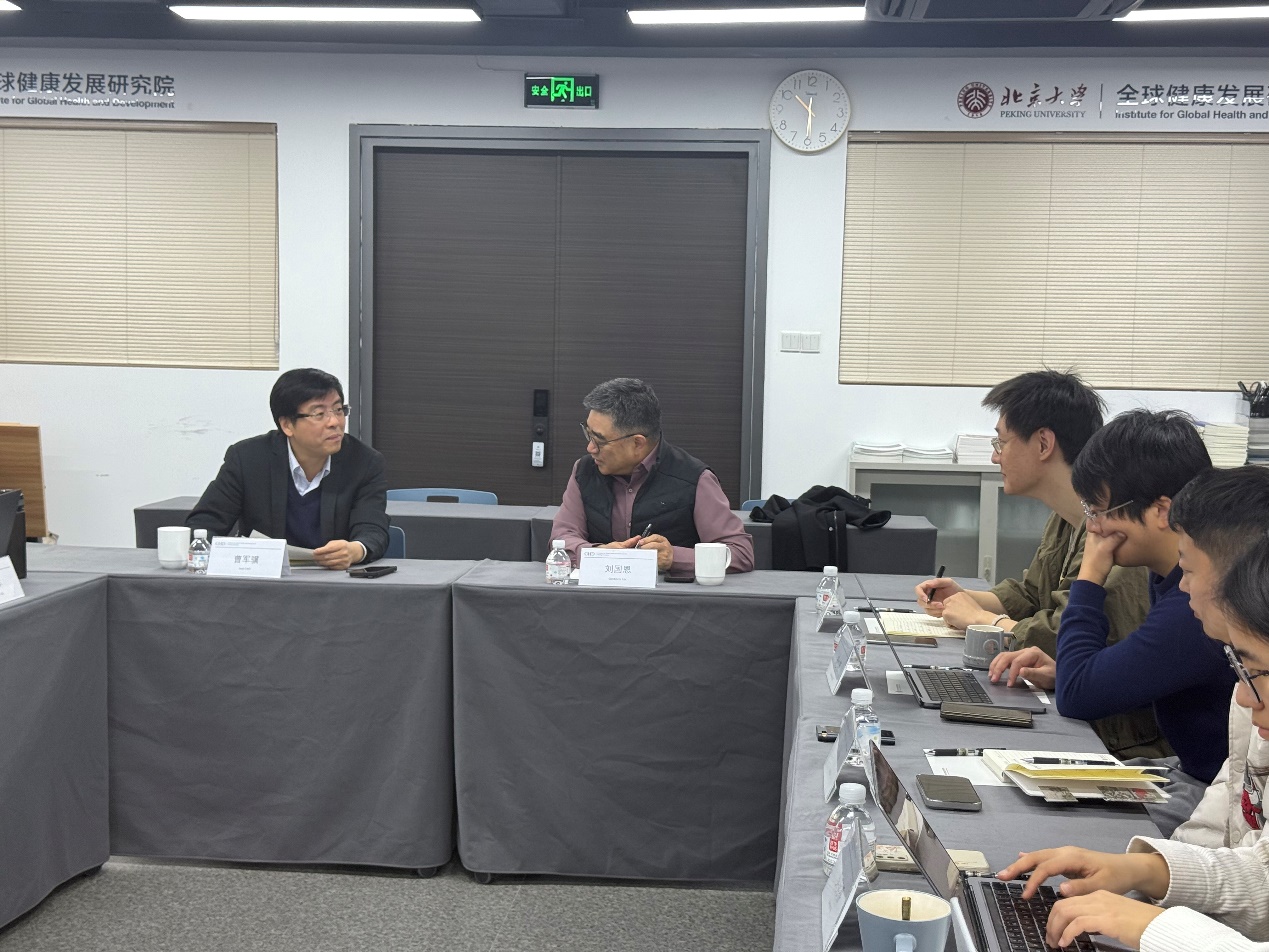
Dean Liu Guo'en reviewed the development journey of the Planetary Health Axis System (PHAS).
Dr. Chen Ermo, Chief Scientist of the PHAS project, highlighted the system's key technological breakthroughs. PHAS innovatively incorporates "societal health" into the holistic planetary health model, extending beyond the traditional scope of "One Health." The data assimilation technology developed for the project enables the extrapolation of point-based observational data into continuous global-scale fields. This breakthrough provides a novel scientific tool for global health governance.
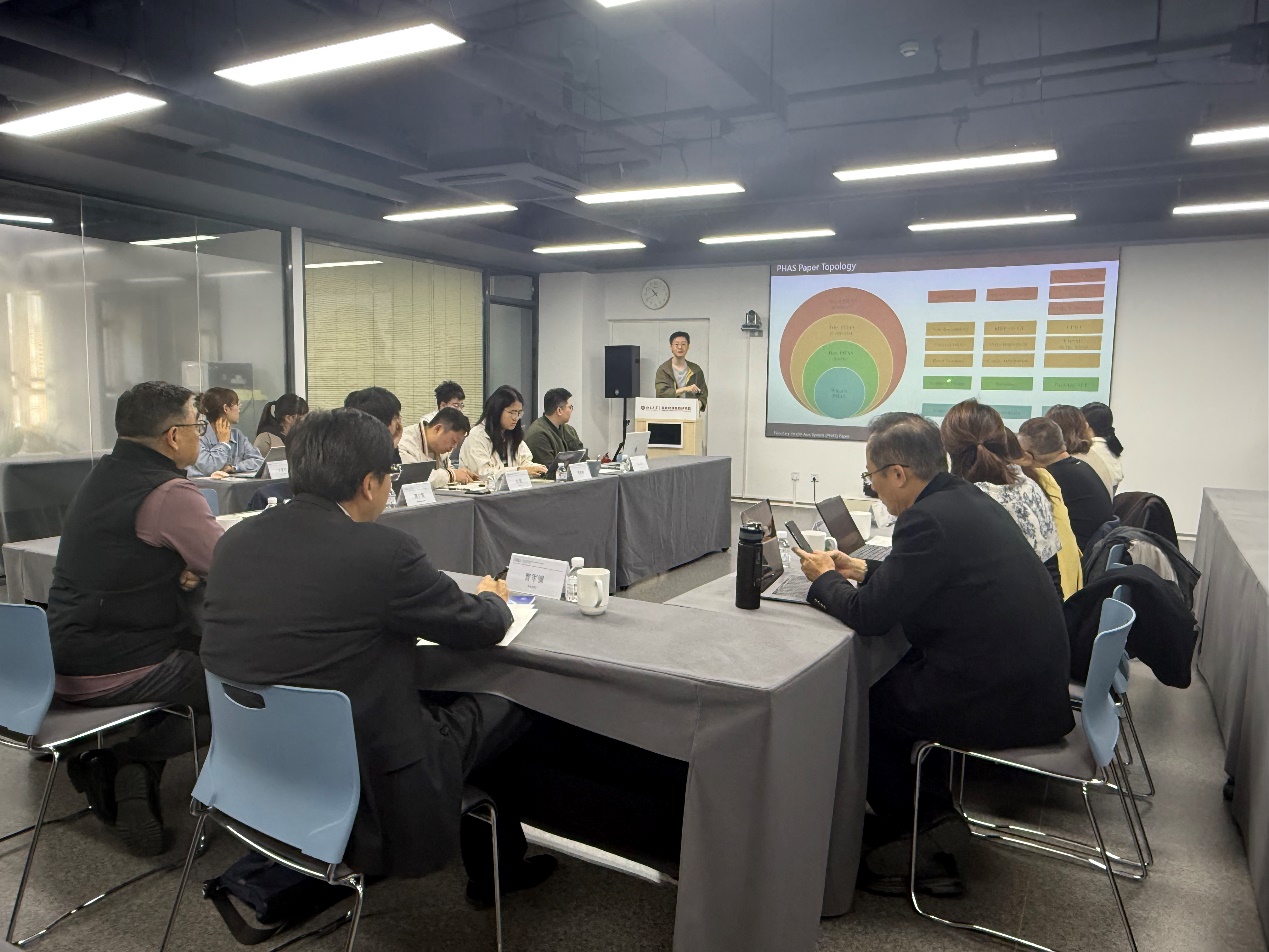
Dr. Chen Ermo introduced the PHAS.
During the exchange meeting, both sides engaged in enthusiastic discussions on the deeper application of the PHAS system. Professor Cao Junji's team provided several constructive suggestions from the perspective of atmospheric science, particularly offering expert advice on modeling aerosol-climate-health interactions. Dean Liu Guo'en expressed that the research expertise of the Institute of Atmospheric Physics, Chinese Academy of Sciences, in the field of environmental health will inject new vitality into the PHAS system. He looks forward to further collaboration between the two parties in areas such as data sharing and model optimization.
Since its launch in October 2023, the Planetary Health Axis System (PHAS) has integrated expertise from scientists at dozens of leading research institutions across China and abroad. In October 2025, the system made its global debut at the World Health Summit 2025 in Berlin. The following month, November 2025, it was successfully launched at the "Human Health and Digital Civilization" forum during the Beijing Forum 2025. The visit by Professor Cao Junji's team marks a significant step forward in the interdisciplinary collaboration between the Peking University PHAS team and atmospheric physicists. This cooperation will provide crucial interdisciplinary support for expanding the application of the PHAS system in areas such as climate health and environmental health.


